




When a couple struggles to conceive, the first instinct is usually to look at the obvious things. Hormone levels, cycle regularity, sperm count. These are important, and they answer a lot of questions. But they do not answer all of them.
Introduction
A significant number of infertility cases, recurrent miscarriages, and failed IVF cycles have a genetic component that standard testing simply does not pick up. The embryo may not implant because of a chromosomal issue. A miscarriage may have occurred because the pregnancy was not viable from the start.
A sperm sample may look adequate on a basic analysis but carry DNA fragmentation that prevents fertilisation or affects early embryo development. None of these show up without the right investigations.
Genetic testing has changed what fertility specialists can see, and by extension, what they can do about it. For couples who have been through unexplained failures, it is often the investigation that finally provides an answer.
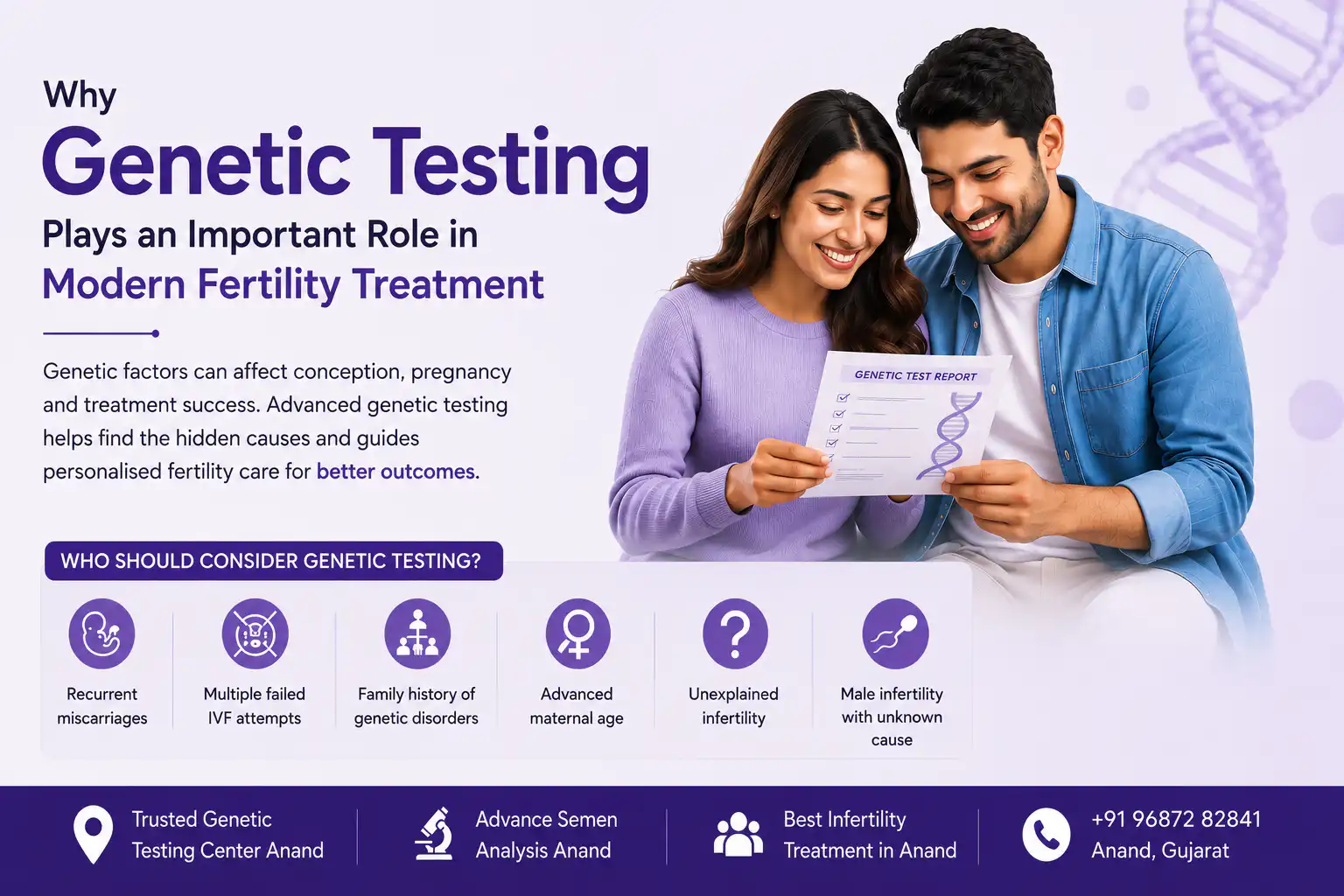
What Genetic Testing
What Genetic Testing Actually Involves
When genetic testing is done in a fertility context, it looks at certain genes or chromosomes in order to find out if there are any inheritable diseases or genetic anomalies that can hinder pregnancy.
What will be required during testing will depend on what needs to be found out – whether it involves taking blood samples from one or both partners, doing DNA tests on the sperm, or testing the chromosomes of the embryo before the implantation of IVF cycles. The types of testing done will depend entirely on the history of the couple, previous testing results, and suspicions of the fertility specialist about the problems involved.
It is not a standard procedure for everyone. Genetic testing has to be done specifically, and for that, one needs a fertility specialist who knows which test is appropriate in each case.
Considering It
Who Should Be Considering It
Miscarriage occurring on a recurrent basis might be considered a strong indicator of a need for a genetic investigation as well. The occurrence of two or more miscarriages in one couple might often occur due to chromosomal abnormalities in one or both of its members. This knowledge alters the treatment methods completely.
The presence of several unsuccessful cycles of the in vitro fertilization procedure without the presence of any specific reason is a good indicator as well, especially when the quality of embryos was good.
A family history of genetic disorders implies that the carriers’ examination should take place prior to pregnancy. Age of the female partner might contribute to the presence of chromosomal abnormalities in the embryos during the in vitro fertilization cycle. Cases of male infertility which are hard to explain might be of a genetic origin.
Unexplained infertility might be considered the most frustrating state of affairs when it comes to the process of reproduction. Genetic investigation is the very thing that turns unexplained infertility into understood infertility.
Semen Analysis
Why Semen Analysis Needs to Go Further Than the Basics
Basic semen analysis reports sperm count, motility, and morphology. These numbers matter, but they do not tell the complete story of male fertility.
Advance Semen Analysis Anand goes further by examining parameters that standard testing misses. DNA fragmentation index is one of the more significant ones. High DNA fragmentation in sperm can result in fertilisation failures, poor embryo quality, and early pregnancy loss even when the basic semen parameters look acceptable.
A man with a normal sperm count and good motility can still have high DNA fragmentation, and without the advanced analysis, this would never be identified.
When advanced semen analysis is combined with genetic investigations, fertility specialists have a much more complete picture of both partners’ reproductive health. Treatment decisions made on this basis are more targeted and more likely to be effective than those made on incomplete information.
The Case for Early Investigation
Fertility treatment comes at a price. Emotional, physical, and financial. Couples who have been through several treatment cycles without knowing the root cause of their problems often find it difficult to convey the exhaustion associated with it to those who have not been through this experience themselves.
Preconception genetic testing does not provide a clear road ahead, but it means that you do not treat the problem in the dark and hope for the best.
It means not undergoing the cycles where a particular approach has little or no chance to work for that particular couple’s biology. It means having an open discussion of what your realistic options are, which include using donated gametes and other approaches.
Sometimes, such a discussion is still easier to digest than months and years of waiting.
Right Centre
Choosing the Right Centre
Genetic testing in a fertility context requires more than laboratory capability. It requires specialists who know how to interpret results in the context of a couple’s full clinical picture, and who can counsel them through what those results mean for their treatment options and family planning decisions.
A trusted Genetic Testing Center Anand with experienced fertility specialists, modern diagnostic facilities, and a multidisciplinary approach ensures that testing leads somewhere useful. The result is not just a report. It is a foundation for a personalised treatment plan.
Conclusion
Infertility investigations have come a long way, and genetic testing is one of the most significant advances available to couples today. It answers questions that basic testing cannot, identifies causes that would otherwise remain unexplained, and makes personalised treatment planning genuinely possible.
If you are searching for a Genetic Testing Center Anand or want to understand whether Advance Semen Analysis Anand is relevant to your situation, consulting a specialist offering the Best Infertility Treatment in Anand is the right starting point. The answers may not always be simple, but having them is almost always better than continuing without them.
Ready to Take the First Step?
Take the next step toward understanding your fertility. Consult our experienced specialists to explore genetic testing, advanced semen analysis, and personalised fertility treatment options.
Dr. Dipan Thakkar
Obstetrician & Fertility Specialist
35+ years of experience in obstetrics, maternity care, and advanced fertility treatments at Usha Nursing Home, Anand.
- Quick Facts
- Key Takeaways
- Genetic factors can contribute to infertility, recurrent miscarriages, and failed IVF cycles.
- Genetic testing can identify chromosomal or inherited factors that standard fertility tests may not detect.
- Couples with recurrent miscarriages, repeated IVF failures, unexplained infertility, or a family history of genetic disorders may benefit from genetic evaluation.
- Advanced semen analysis can identify sperm DNA fragmentation that may affect fertilisation and embryo development.
- Early genetic investigation can help fertility specialists develop a more personalised treatment approach.
- Genetic test results should be interpreted by experienced fertility specialists to guide appropriate treatment and family-planning decisions.
- Book a Consultation
Speak with our experienced fertility specialists to understand whether genetic testing or advanced semen analysis may be appropriate for your fertility journey and treatment plan.